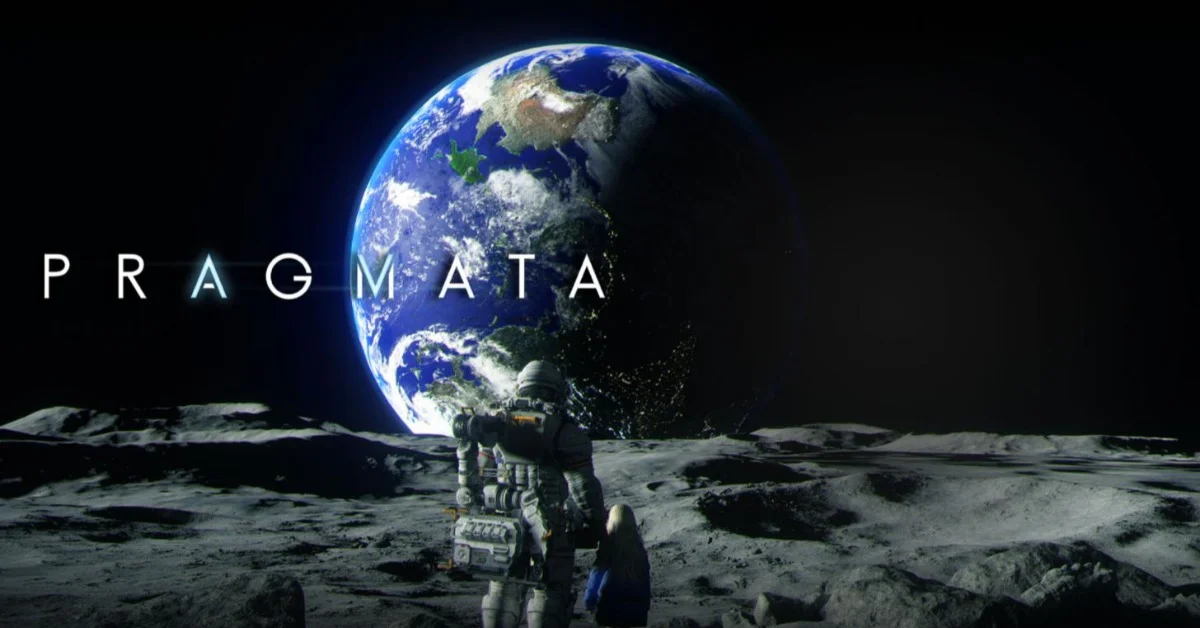
Pragmata has moved from long-running Capcom mystery to a commercially visible new IP. The sci-fi action-adventure game is now available, and Capcom says worldwide sales passed two million units in 16 days after its April 17, 2026 launch. The stronger story now is how a new Capcom property landed after years of uncertainty and quickly found an audience.
Pragmata is not redefining sci-fi gaming by itself, and no single launch can prove that. What the early data does show is a strong start: positive critic reception, a clear identity built around Hugh and Diana, and a sales milestone that suggests players were ready for something new from Capcom beyond its established franchises.
A new IP after years of delays
Capcom first showed Pragmata years before release, and the game became known partly because of its long silence. That history created both curiosity and risk. A delayed project can arrive feeling polished and focused, or it can struggle under years of expectations. Capcom’s current announcement suggests that, commercially, the game cleared its first major test.
The official site positions Pragmata as a sci-fi action-adventure game on PlayStation 5, Xbox Series X|S, PC and Nintendo Switch 2. The core appeal is not simply shooting. The relationship between Hugh Williams and Diana, the moon setting, hacking-oriented mechanics and tactical combat structure give the game an identity separate from Capcom’s more familiar horror and hunting franchises.
What the reviews suggest
Metacritic and OpenCritic show a generally strong critical reception. Individual reviews highlighted the game’s blend of action, puzzle-like hacking and character-driven storytelling. Review scores are not a substitute for personal taste, but they are useful here because they show that Pragmata did not survive on hype alone.
The praise also helps explain the sales momentum. A new IP has to work harder than a sequel because it cannot rely only on brand memory. Strong reviews, a clear premise and Capcom’s recent reputation for quality releases all gave Pragmata a better chance to stand out in a crowded 2026 calendar.
That distinction matters because new IP success is harder to earn than sequel success. A sequel can lean on an existing community, while Pragmata had to explain its world, mechanics and emotional tone from the ground up. Crossing a major sales milestone quickly gives Capcom evidence that the pitch connected beyond curiosity.
Why Capcom needed this to work
Capcom already has powerful franchises: Resident Evil, Monster Hunter, Street Fighter and others. That makes a new IP valuable but risky. A company can become too dependent on legacy brands if new ideas fail to connect. Pragmata gives Capcom evidence that it can still launch a fresh large-scale property and find an audience quickly.
The two-million-unit figure is important because it comes from Capcom itself and refers to the first 16 days. That does not guarantee long-term franchise status, but it gives the company room to consider expansions, updates or future entries. For a new sci-fi action-adventure game, the opening is stronger than a simple niche success.
The buyer takeaway
Players should still look past the excitement and consider whether the game fits their preferences. Pragmata appears strongest for those interested in single-player sci-fi, tactical third-person combat, hacking systems and a central character relationship. Players looking for a pure shooter, open-world sandbox or multiplayer live-service game may respond differently.
The most accurate conclusion is that Pragmata has become one of Capcom’s strongest new-IP starts in recent years. Its sales and reviews are real signals, but the game’s long-term importance will depend on player retention, patches, platform performance and whether Capcom chooses to build it into a continuing franchise.