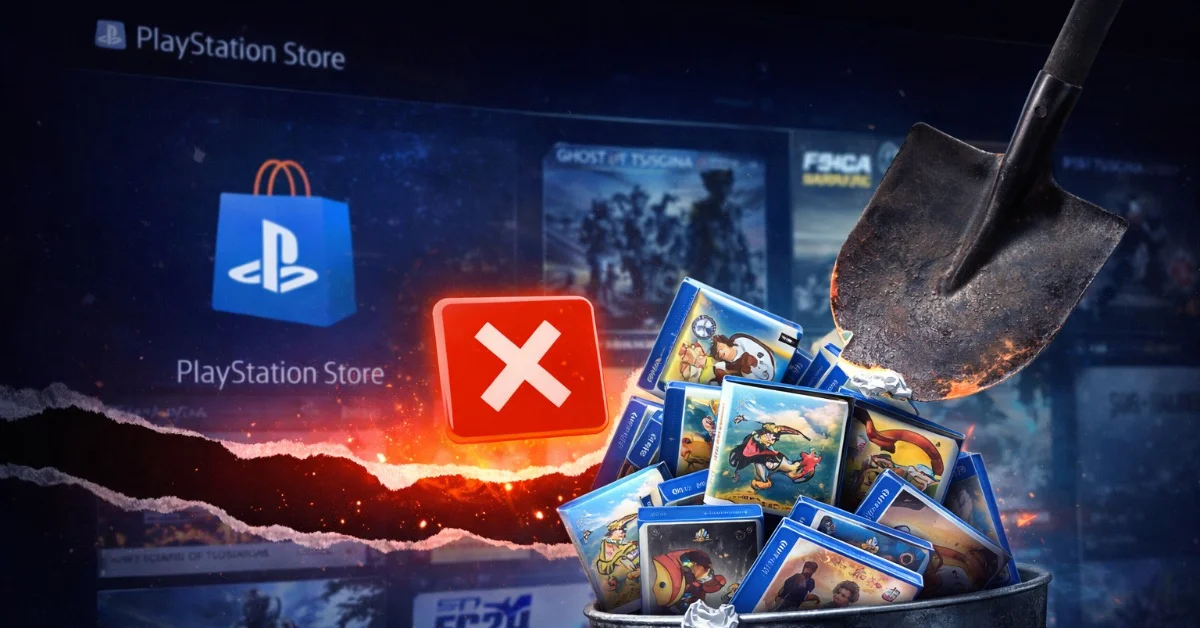
Sony appears to have removed another group of low-quality games from the PlayStation Store, continuing a wider cleanup of listings often described by players as shovelware. The latest wave was not announced through a formal Sony blog post, so the safest reading is that the removals were first spotted by store watchers and then verified by specialist gaming outlets. Reports from Insider Gaming, GamesRadar and Push Square all point to catalogues connected with GoGame Console Publisher, VRCForge Studios and Welding Byte as part of the recent removals.
What was reportedly removed?
The listings in question were not major releases. They were the kind of low-effort store entries players often criticize for cluttering discovery pages: minimal gameplay, repetitive assets, inflated trophy value or titles designed to mimic search demand rather than offer a meaningful game. Sony has not published a full public list, so exact counts should be treated carefully. The pattern, however, is consistent with a broader effort to make the PlayStation Store easier to browse.
This is not the first time console stores have faced this issue. Digital storefronts benefit from openness because small developers can publish without the old retail barriers. But when quality control is too loose, the same openness can bury legitimate indie games under spam-like listings.
Why Sony is acting now
Store quality is not just an aesthetic concern. It affects search, recommendation systems, refund pressure and player trust. If users repeatedly see low-quality or misleading products, they become less willing to browse new releases. That hurts players, but it also hurts serious smaller developers whose games can be pushed down by volume-based catalogue tactics.
There is also a platform-brand issue. Sony wants the PlayStation Store to feel curated enough that users can trust what they see, while still leaving room for experimental and low-budget games. The difficult part is drawing a fair line between rough indie work and exploitative shovelware.
What it means for players and developers
For players, the immediate effect should be a cleaner store experience if removals continue. Fewer spam-like listings can make new-release pages and trophy-driven searches more useful. But players should still expect uneven quality in any large digital marketplace; no cleanup removes the need to read store pages, trailers and user feedback carefully.
For developers, the message is that platform holders are paying closer attention to store behavior. A small budget is not the problem. Misleading naming, recycled assets, trophy bait and attempts to flood the store are the real risks. A healthier store should help credible independent games stand out, but only if enforcement is consistent and transparent enough that legitimate small teams are not caught in the same net.
The cleanup also raises a transparency question. Players usually welcome the removal of obvious spam, but developers need to know which rules are being enforced. A store can become cleaner without becoming hostile to unusual games, short experiments or niche projects. The best outcome would be a marketplace where small games still have room to exist, while listings built mainly to exploit search, trophies or store volume are pushed out.