Unreal Engine 5.4 was an important release for studios chasing more realistic games, but the bigger story is not a single version number. Epic's recent Unreal Engine roadmap shows a wider shift in production: developers need high-end visuals, but they also need tools that let artists and engineers build, test and optimize faster. Photorealism is no longer only a rendering problem. It is a workflow problem.
Epic described Unreal Engine 5.4 as a release focused on performance, visual fidelity and productivity. The update improved animation authoring, added tools used internally on Fortnite projects and expanded systems such as Motion Matching, Modular Control Rig, Nanite and rendering workflows. For many teams, that mattered because realistic games are expensive to build. A beautiful demo is not enough if the tools slow down animation, iteration or optimization.
From 5.4 to 5.6, Epic moved the focus to production speed
The later Unreal Engine 5.6 release made that direction clearer. Epic said one of the goals was to help teams build large, high-fidelity open worlds that can run smoothly at 60 frames per second on current hardware. The release also pushed an engine-first animation and rigging workflow and brought MetaHuman authoring directly into Unreal Engine. That matters because character work, cinematic presentation and open-world streaming are often where ambitious projects become difficult to ship.
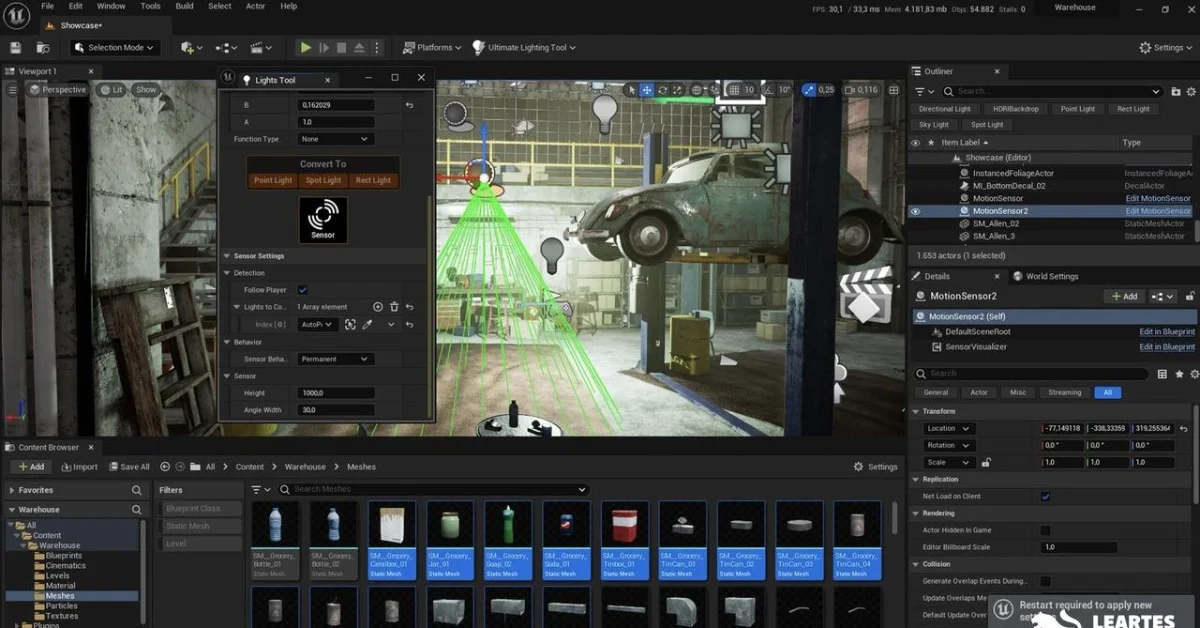
The practical lesson for developers is simple: the engine is not just a graphics showcase. It is becoming a production environment. If animators can adjust characters in the editor, if designers can test large worlds more quickly and if technical artists can reduce round trips to external tools, the team has a better chance of turning visual ambition into a finished game. That is why Epic keeps talking about workflow alongside fidelity.
Realism still needs performance discipline
Unreal Engine 5 has also faced criticism from players who associate some UE5 games with stutter, uneven frame rates or heavy hardware demands. That criticism is not separate from the realism push. The same technologies that make scenes look richer can create performance pressure if a project leaves optimization too late. For studios, the question is not whether Unreal Engine can produce impressive visuals. It clearly can. The harder question is whether teams can set budgets early and keep them under control until launch.
That is why the conversation around Unreal Engine in 2026 is more mature than it was at the start of UE5. Nanite, Lumen, MetaHuman and PCG can help developers build worlds that look expensive and detailed. But players judge the final product by responsiveness, stability and frame pacing as much as screenshots. A photorealistic scene that stutters on common hardware will not feel premium.
Epic's direction points toward a more realistic production model: better visuals, more in-editor authoring and stronger performance targets. Unreal Engine 5.4 helped establish several of those tools; Unreal Engine 5.6 pushed the same idea further. For developers, the opportunity is large, but so is the responsibility. The next wave of Unreal games will be judged not only by how close they get to reality, but by whether they can deliver that detail smoothly in the hands of players.