Last Flag, the 5v5 shooter from Night Street Games, can no longer be treated only as a fresh launch story. The game arrived on PC on April 14, 2026 with a distinctive twist on capture-the-flag, but within weeks the studio acknowledged that player numbers were not high enough to sustain a large long-term development roadmap.
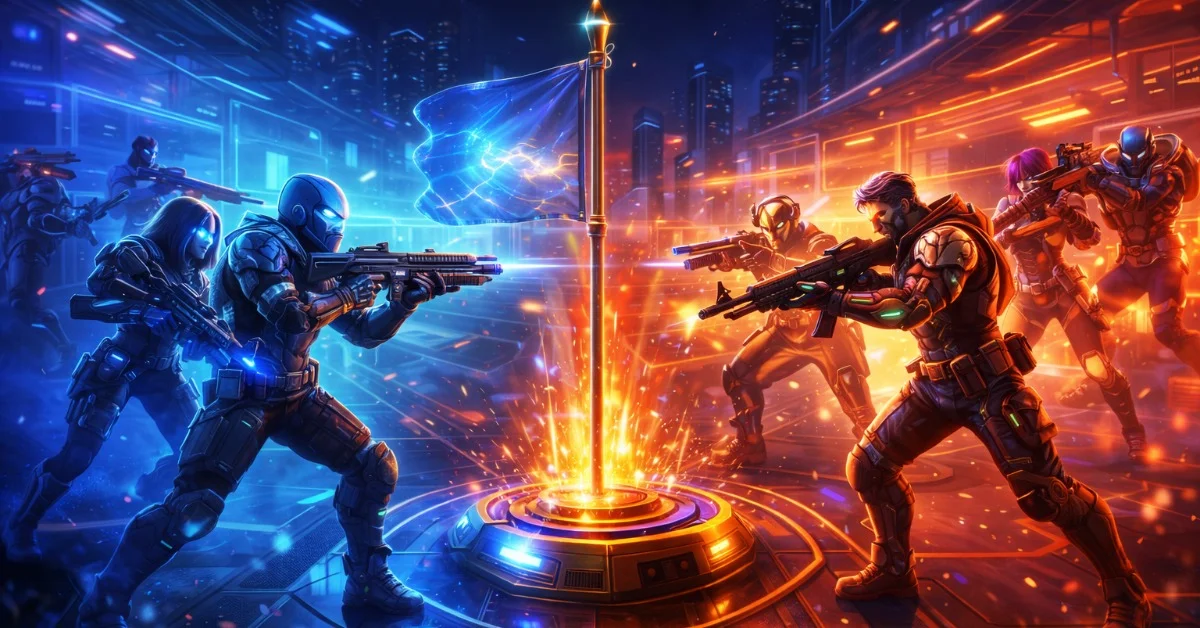
The concept remains interesting. Instead of fixed flags, teams hide, hunt and capture objectives in short matches built around heroes, abilities and a retro game-show style. The official site describes the core loop plainly: hide your flag, find the enemy flag, run it back and defend it for a minute. That is a smart way to make an old multiplayer mode feel less static.
What Last Flag brought to PC
The Steam page lists Last Flag as a Windows multiplayer title published by Night Street Games and released on April 14, 2026. The game’s identity is built around 5v5 capture-the-flag matches, compact arenas and character roles rather than a huge class roster or a sprawling live-service structure. It also launched as a paid game rather than a free-to-play shooter full of battle passes.
That was part of the appeal. Night Street Games tried to make a focused multiplayer game with a clear mode and a lower price point. The studio was founded by Dan and Mac Reynolds, giving the project a level of attention most small shooters do not receive. Even so, attention and celebrity visibility did not automatically create a durable player base.
Why the launch story changed quickly
Heise reported in early May that Last Flag had struggled to reach a sustainable audience, citing SteamDB figures around a launch peak of roughly 560 concurrent players and much lower numbers afterward. Kotaku also reported that the studio does not plan to shut the game down immediately, but that major future development is unlikely beyond already planned updates.
That distinction matters. Last Flag is not disappearing overnight. The studio has said it wants to deliver planned updates, add more control for players and lean on community tools. The change is that the big post-launch roadmap has effectively been scaled down because the game did not find enough players quickly enough.
The multiplayer market leaves little room
The situation shows how unforgiving the multiplayer market has become. A shooter can have a strong idea, a recognizable backstory and positive word of mouth from a small community, yet still struggle if matchmaking pools are thin. When queues take longer and matches feel less active, casual players move on. That creates a difficult loop for any new online game.
Last Flag also arrived in a crowded field. Competitive shooters compete not only with new releases, but with established games that already have friends lists, seasons, streamers and years of content. A paid 5v5 game without a massive launch audience has to prove itself almost immediately.
A clever idea with an uncertain future
The most useful way to look at Last Flag now is as a game with a strong mechanical hook and a difficult commercial reality. Its capture-the-flag design still stands out, and the plan to support custom lobbies could help dedicated players keep it alive. But the reduced roadmap makes clear that the project will depend heavily on its remaining community.
For players, the question is no longer only whether the idea sounds fun. It is also whether there will be enough people to play with, and whether the promised community tools arrive in a form that keeps matches active. Last Flag had a clever launch pitch; its future now depends on whether a smaller but committed audience can carry it forward.