Apple used WWDC26 less as a hardware showcase than as a broad software reset. The company introduced Siri AI, previewed iOS 27 and macOS 27 Golden Gate, detailed new child safety tools and tied the event to a leadership transition already under way. Because Tim Cook is due to become executive chairman on September 1, with John Ternus taking over as CEO, this was also almost certainly Cook’s final WWDC keynote as Apple’s chief executive. For readers following Apple’s handover to Ternus, the keynote was as much about the next operating era as the next operating systems.
What Siri AI changes, and what Gemini does not mean
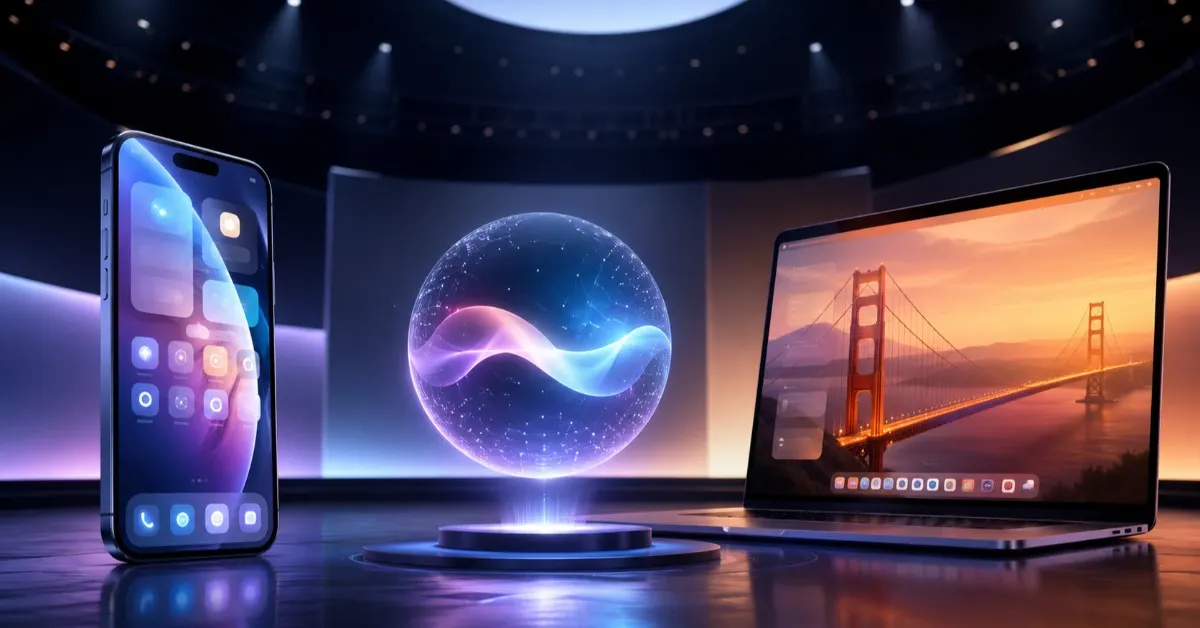
The central product story is Siri AI. Apple describes it as an entirely new version of Siri, powered by Apple Intelligence, with personal context, onscreen awareness, broader web knowledge, richer conversations and more actions across apps. Siri AI is also getting a dedicated app so users can revisit conversations across their Apple devices. Developer testing has started, while a broader beta is planned for later this year with supported devices set to English first.
The Google angle is important, but it should not be overstated. Apple’s own newsroom language focuses on Apple Intelligence, Apple Foundation Models, on-device processing and Private Cloud Compute. MacRumors and TechCrunch report that the new AI architecture was developed in collaboration with Google and draws on technologies behind the Gemini family. That is important, but it is not the same as saying every Siri request simply runs on Gemini or that Google receives user data. The cleaner framing is that Apple is using outside model work to strengthen its own protected Apple Intelligence stack.
iOS 27 and macOS Golden Gate are about speed and repair
iOS 27 is not only an AI release. Apple says the new software releases make apps launch up to 30 percent faster, photos appear up to 70 percent faster after being taken and AirDrop transfers up to 80 percent faster in its tests. The company is also rebuilding search across Spotlight, Photos and Mail, a practical change after years of complaints that basic device search had become less dependable.
On the Mac, the headline is macOS 27 Golden Gate. The release refines the Liquid Glass design, adds a control for the look of that interface and brings Siri AI into Spotlight and systemwide context menus. MacRumors’ compatibility list also points to a clean Apple silicon cut-off, with supported Macs starting from Apple silicon models rather than older Intel machines. That makes Golden Gate both a software polish release and another step away from Apple’s Intel era.
Parents get more controls, Europe gets a caveat
Apple also spent meaningful time on family safety. The new tools include a simpler child-account setup, Ask to Browse for Safari, app access controls, Time Allowances and a redesigned Screen Time interface. The most useful part is that Apple is trying to make age-based restrictions part of setup rather than something parents have to discover later in Settings.
There is a major availability footnote. Apple says Siri AI will not initially ship on iOS 27, iPadOS 27 or watchOS 27 in the European Union because of the Digital Markets Act, though Mac and Vision Pro users in the EU are expected to have access when using a supported language. China is also excluded while Apple works through regulatory requirements. For a global audience, that makes availability almost as important as the feature list.
The real test comes after the beta
WWDC26 gives Apple a clearer AI story than it had a year ago, but it does not settle the question of execution. Siri AI has to work reliably across personal data, apps, web answers and privacy boundaries. iOS 27 has to deliver the promised speed gains on older supported devices, not only in controlled tests. macOS Golden Gate has to make the Mac feel cleaner without turning the design slider into a distraction.
The more grounded takeaway is this: Apple finally put Siri, software performance and family controls on the same stage, while preparing for the post-Cook era. The keynote was significant, but the lasting judgment will come from beta quality, regional availability and whether Siri AI can feel useful in everyday tasks rather than impressive only in demos.