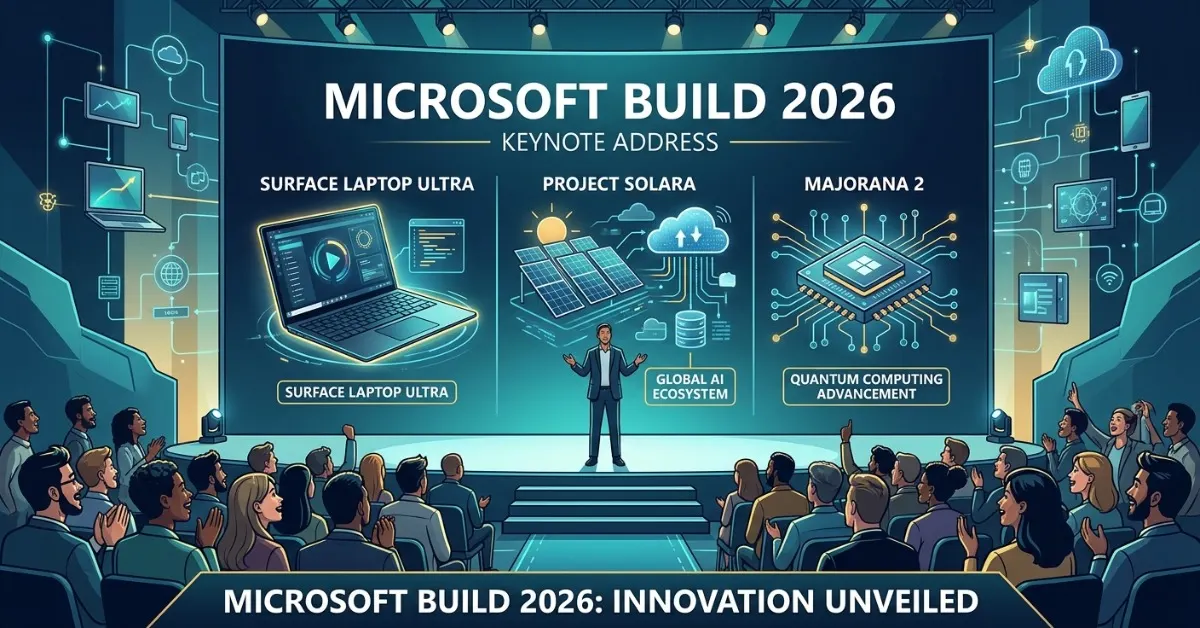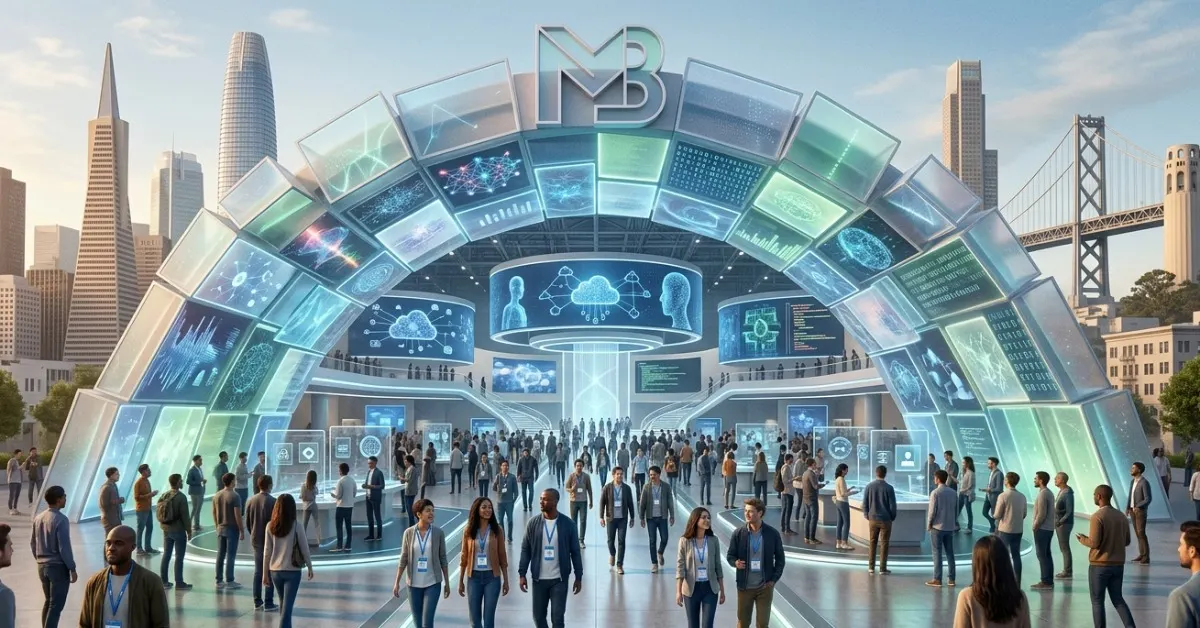
Microsoft Build 2026 arrives at a moment when the company’s developer story is no longer just about adding AI features to existing tools. The official event page lists Build for June 2–3 in San Francisco and online, while Microsoft’s event directory places the in-person program at Fort Mason Center. That gives developers a compact two-day window to judge how Microsoft wants GitHub, Azure, Windows, Edge and Microsoft Foundry to fit together in practical AI workflows.
What is confirmed for Build 2026?
The confirmed outline is straightforward: Build 2026 is a developer conference, not a consumer hardware show, and its public materials point to AI-assisted software delivery as the center of gravity. GitHub says its presence at the event will focus on “real code, real systems and real workflows,” with teams showing how developers can build, collaborate and ship with AI more effectively. That wording matters because it moves the conversation away from abstract assistant demos and toward day-to-day engineering work.
Microsoft’s startup-focused session guide reinforces the same direction. It highlights sessions around GitHub Copilot agents, Azure DevOps and GitHub integration, model distillation, agentic RAG on Azure Cosmos DB and shipping custom models from fine-tuning to inference. The result is a Build agenda shaped less around one headline product and more around the operational problem of putting AI into production without letting cost, latency and complexity get out of control.
GitHub Copilot and agents will be the real test
The most important question is how far Microsoft can take Copilot from code completion into managed developer agents. The company has spent the past two years pushing Copilot into Visual Studio, GitHub, Microsoft 365 and Windows. Build 2026 is where developers will look for cleaner answers on autonomy, permissions, debugging, testing and team workflows. An agent that can generate code is useful; an agent that can safely debug, profile, test and explain its work inside an existing repository is far more consequential.
That is also why Microsoft Foundry matters. The developer audience is no longer asking only which frontier model is best. Teams want to know how models are selected, routed, evaluated, fine-tuned, observed and governed across real applications. If Build delivers practical guidance on those questions, it will feel useful. If it stays at the level of broad AI slogans, the two-day format will make that obvious very quickly.
Edge and enterprise AI browsing are part of the same story
Edge is not the headline act, but it shows where Microsoft is trying to take enterprise AI. Microsoft’s Edge release notes say the limited public preview for Browsing with Copilot in Edge for Business is open for admin signups. The feature is described as agentic browsing for enterprise users, allowing Copilot to navigate websites, fill in information and complete multi-step tasks on behalf of users. That is not a normal browser feature; it is another example of Microsoft trying to embed AI into workplace flows rather than leaving it in a chat window.
For developers, the key issue is control. Agentic browsing, repository-level Copilot actions and custom model workflows all raise the same questions: what data is accessed, what actions are allowed, how decisions are logged and how teams recover when an automation makes a mistake. Build 2026 will be judged by how clearly Microsoft answers those governance questions.
What not to overstate yet
There is no need to treat every Build rumor as a launch. The official materials confirm the event date, hybrid format, GitHub presence and a strong AI workflow agenda. They do not, by themselves, confirm a single surprise announcement or a universal rollout for every preview feature. The safer reading is that Build 2026 will be a checkpoint for Microsoft’s AI developer stack: Copilot agents, Microsoft Foundry, Azure infrastructure, Edge for Business and the practical work of turning prototypes into systems.
That makes the event important, but not because one keynote is likely to settle the market. Its value will come from the detail: what Microsoft shows in code, what it documents for teams, and how much of the agentic workflow story is actually ready for developers to use after the show.