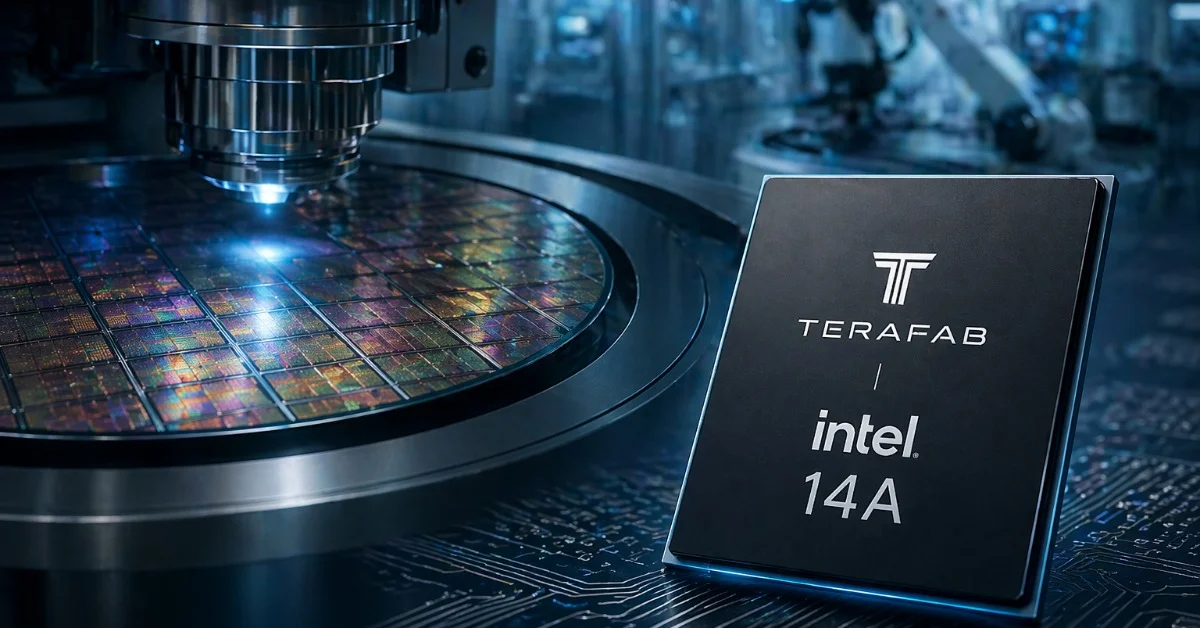
Elon Musk’s proposed Terafab project is turning into more than another large industrial buildout. The plan, described in recent filings and by Musk in investor remarks, would put Intel’s still-developing 14A manufacturing process at the center of an effort to make AI chips for the companies around Tesla and SpaceX.
Intel 14A is the key technical bet
Reuters reported that Tesla plans to use Intel’s 14A process for chips tied to the Terafab project. That does not mean the plant is ready or that the commercial terms are already fully visible. The important point is narrower and more concrete: Musk is looking at Intel’s next-generation foundry roadmap as a way to secure advanced AI silicon capacity later in the decade.
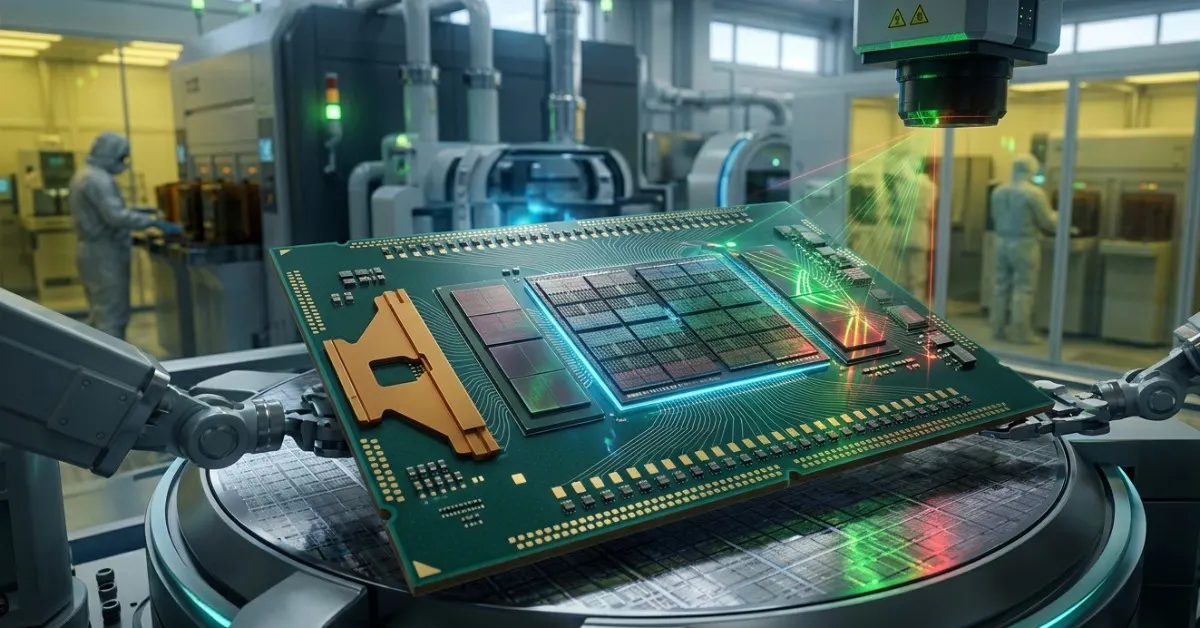
Intel has positioned 14A as the node after 18A, with RibbonFET 2 gate-all-around transistors, PowerDirect backside power delivery and better performance-per-watt targets. The company’s own foundry material says the process is designed for AI and high-performance computing workloads, but it is still a roadmap technology rather than a mature volume node. That makes the Terafab plan both ambitious and risky.
Why Musk wants more chip control
Tesla depends on chips for autonomous driving, robotics and AI training. SpaceX increasingly needs compute for satellites, communications, simulation and the broader AI infrastructure projects tied to Musk’s companies. Buying from established suppliers can work, but it leaves these businesses exposed to capacity limits, pricing pressure and the strategic priorities of outside foundries.
The Terafab idea addresses that weakness by moving more of the stack in-house. Reuters has reported a much larger manufacturing plan in Texas, with SpaceX seeking tax incentives for a facility that could represent tens of billions of dollars in investment. If the project advances, it would be less like a conventional supplier agreement and more like a long-term attempt to control the manufacturing base behind Musk’s AI systems.
A possible win for Intel, but not a guarantee
For Intel, a major Musk-linked customer would be valuable. Intel Foundry has spent years trying to prove it can compete for external customers against TSMC and Samsung. A visible AI customer would strengthen the case that its roadmap can attract demand beyond Intel’s own processors.
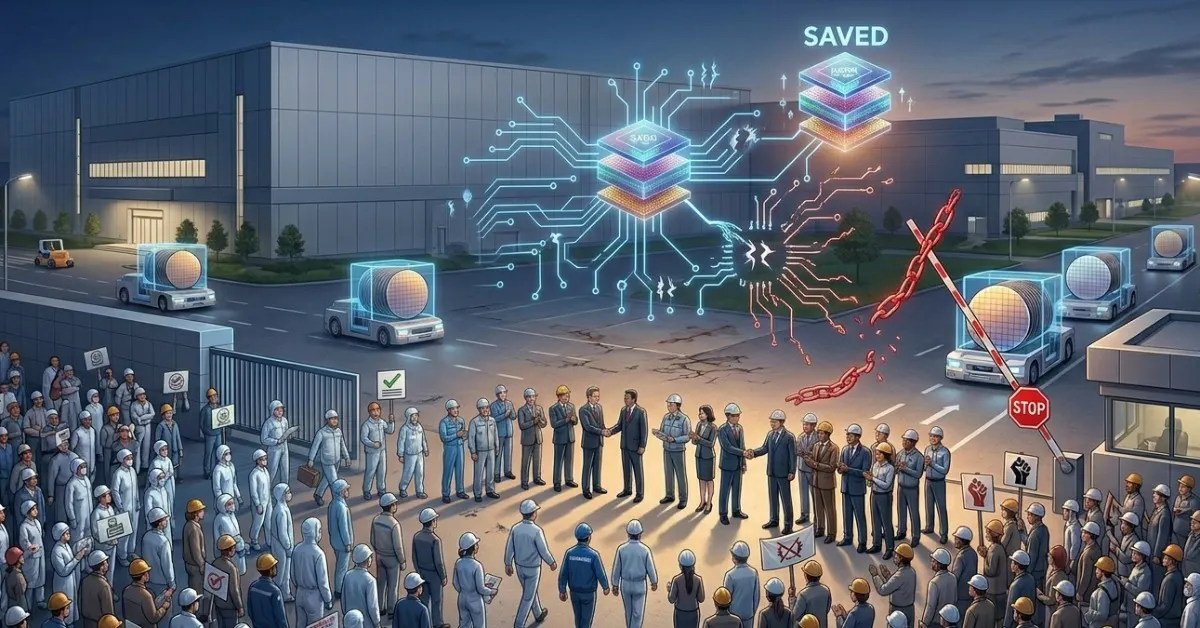
The catch is timing. Intel 14A must still prove yield, cost and reliability at scale. Terafab must also clear the normal hurdles of permits, financing, equipment supply, labor, construction and customer commitments. Even with Musk’s record of building large industrial projects, semiconductor fabs are not software launches; delays are common and expensive.
The real story is strategic dependence
The announcement signals where AI infrastructure is heading. Large technology groups no longer see chips as interchangeable components. They see them as a constraint that can decide which products ship, which models run and which companies can scale.
If Terafab becomes real, it would tie AI software, chip design, manufacturing and data-center demand more tightly inside Musk’s corporate orbit. If it stalls, the episode will still show why advanced foundry capacity has become one of the most contested assets in the AI boom.