
The analysis that accompanies this guide explains why earning money in 2026 is changing: AI is accelerating knowledge work, freelance infrastructure is more mature, and the creator economy has become a serious business channel rather than a side-show. This guide turns that analysis into practical options: which income models are realistic, who they suit and what risks need to be understood before starting.
The boundary is important. This is not a list of get-rich-quick schemes or passive-income fantasies. Every method here requires real effort, skill development and patience. They are not easier than employment. Their advantage is that they can create leverage: good work can reach larger markets, income does not always depend on selling one hour at a time, and a person can reduce reliance on a single employer or client.
The ten methods below are organised roughly from the easiest to start to those with the highest ceiling. They are not mutually exclusive; many successful people in the new economy combine several.
1. High-Value Freelancing on International Platforms
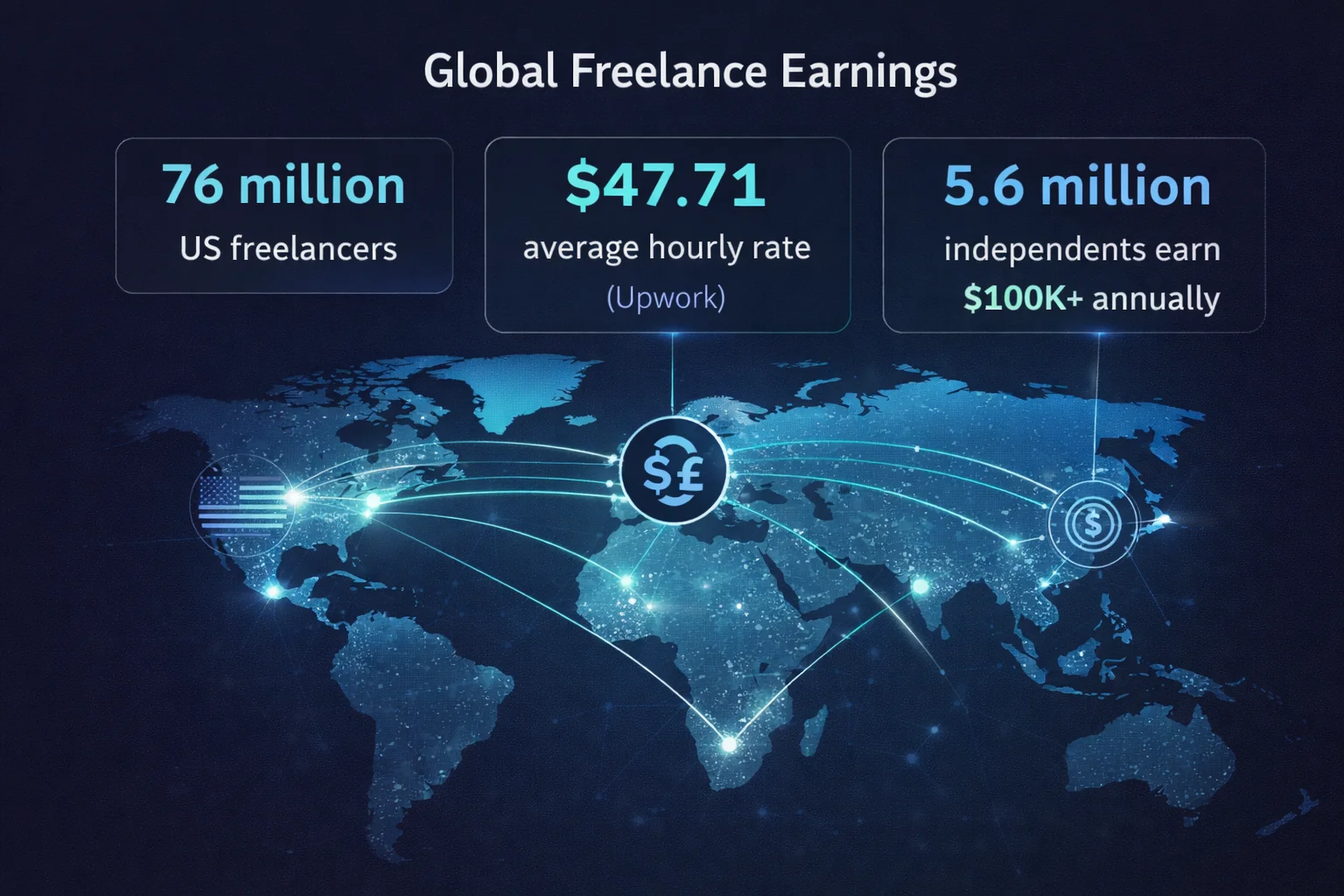
The most direct entry point into the new income landscape for most skilled professionals is selling their existing expertise on international freelance platforms. Upwork, Toptal, Fiverr Pro and a growing number of sector-specific platforms connect skilled workers with clients across the US, UK, Canada, Australia and Western Europe who are willing to pay rates that reflect those markets' cost structures.
The economics are straightforward: a software developer billing $80 to $150 per hour for a US client, a copywriter charging $0.20 to $0.50 per word for a UK content agency, a financial analyst providing research at $60 to $120 per hour for an American investment firm; these rates are significantly above what the same work commands in most other markets. Upwork's public rate data shows that specialist categories such as development, data, cybersecurity and strategy can command substantially higher hourly ranges than general support work. MBO Partners counted 72.9 million independent workers in the US in 2025, including a record 5.6 million earning more than $100,000 annually.
The prerequisite is a credible profile, strong English communication, demonstrable work samples and the willingness to start at a lower rate to accumulate reviews. Profile quality is genuinely the rate-limiting step; the platforms have enough demand that skilled professionals who present themselves well rarely struggle to find work. The harder challenge is patience in the early weeks before reviews accumulate.
For professionals outside the US and UK, the currency arbitrage is significant. Earning in dollars or pounds while living on local costs creates a financial buffer that is extremely difficult to replicate through domestic employment.
2. Building and Monetising a Niche Content Platform
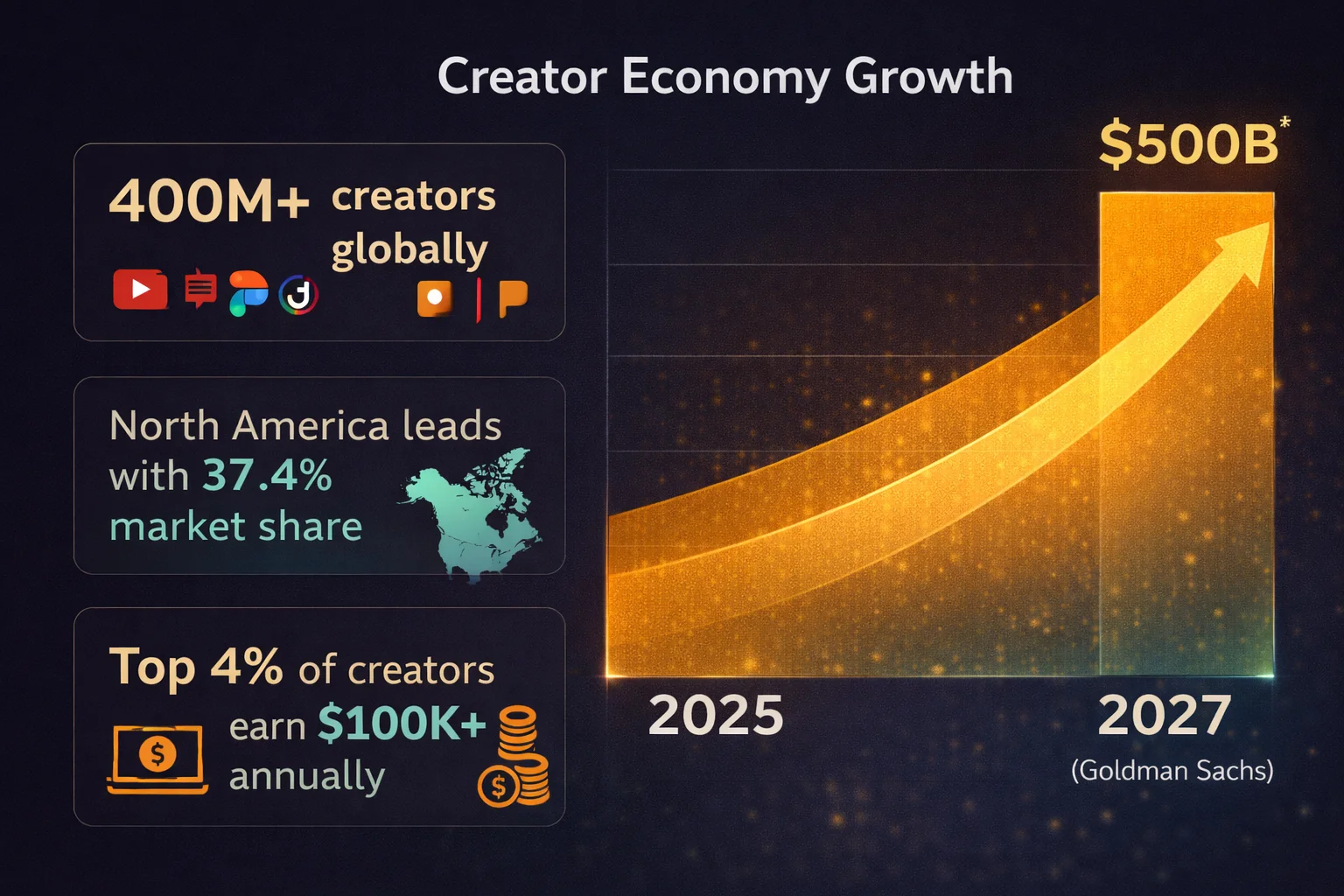
Goldman Sachs estimated the creator economy at about 250 billion dollars in 2023 and projected that it could approach 480 billion dollars by 2027. That market is driven by content, and the mechanisms for monetising content have matured substantially. YouTube's Partner Programme pays per thousand views; Substack, Beehiiv and Ghost allow newsletter writers to charge monthly subscriptions; podcast platforms including Spotify have creator monetisation programmes; and social platforms from TikTok to LinkedIn increasingly route money to creators through brand partnership marketplaces.
The critical insight, which many aspiring creators miss, is that general content is no longer viable. The creator economy rewards specificity. A YouTube channel about cooking will struggle; a channel about Japanese fermentation techniques for home cooks has a clearly defined audience that sponsors in the food and kitchen space are willing to pay to reach. A newsletter about marketing will compete with thousands of others; a newsletter specifically about B2B SaaS marketing for early-stage startups has a precise audience with high commercial value.
Income from content platforms follows a power-law distribution. The median creator earns very little; the top tier earns extraordinary amounts. The 4 percent of full-time creators who earn over $100,000 annually are almost universally those who chose tight niches, published consistently for at least two years, and diversified their income across multiple streams, advertising, sponsorships, digital products and memberships, rather than relying on any single revenue source.
3. Leveraging AI Tools to Multiply Professional Output
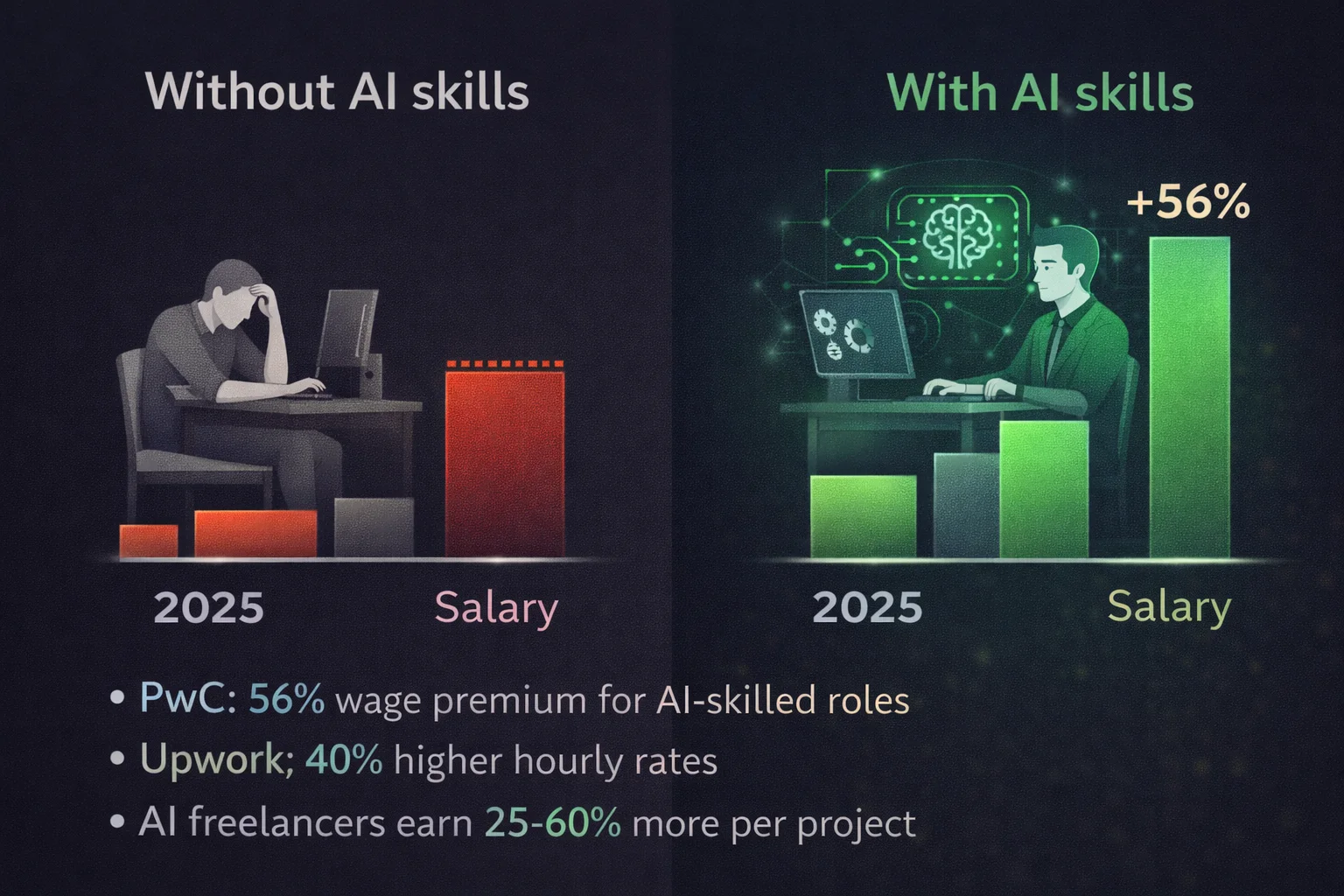
This method is somewhat different from the others in that it is not a standalone income model but a force multiplier that applies to almost every other method on this list. In 2025, 78 percent of freelancers reported using AI tools to enhance their productivity. Freelancers with advanced AI skills commanded a 40 percent hourly premium over those without, according to Upwork data. AI-specialised freelancers more broadly earned between 25 and 60 percent more than general practitioners in the same field.
The practical application differs by profession. A copywriter who uses AI to research, outline and draft initial versions of content can produce three to four times the volume in the same time, taking on more clients or charging more for speed. A developer using GitHub Copilot or Claude Code completes projects faster and can offer shorter turnarounds as a competitive differentiator. A financial analyst using AI to aggregate and summarise market data can handle more clients without proportionally more hours.
The key is not to treat AI as a shortcut that produces finished work, but as a skilled collaborator that handles the mechanical and research components while you provide the judgment, editing, context and quality control that the work requires. Clients pay for the outcome; they do not care how you produced it, as long as it meets the standard they expect. That standard must still be genuinely high.
4. Creating and Selling Digital Products
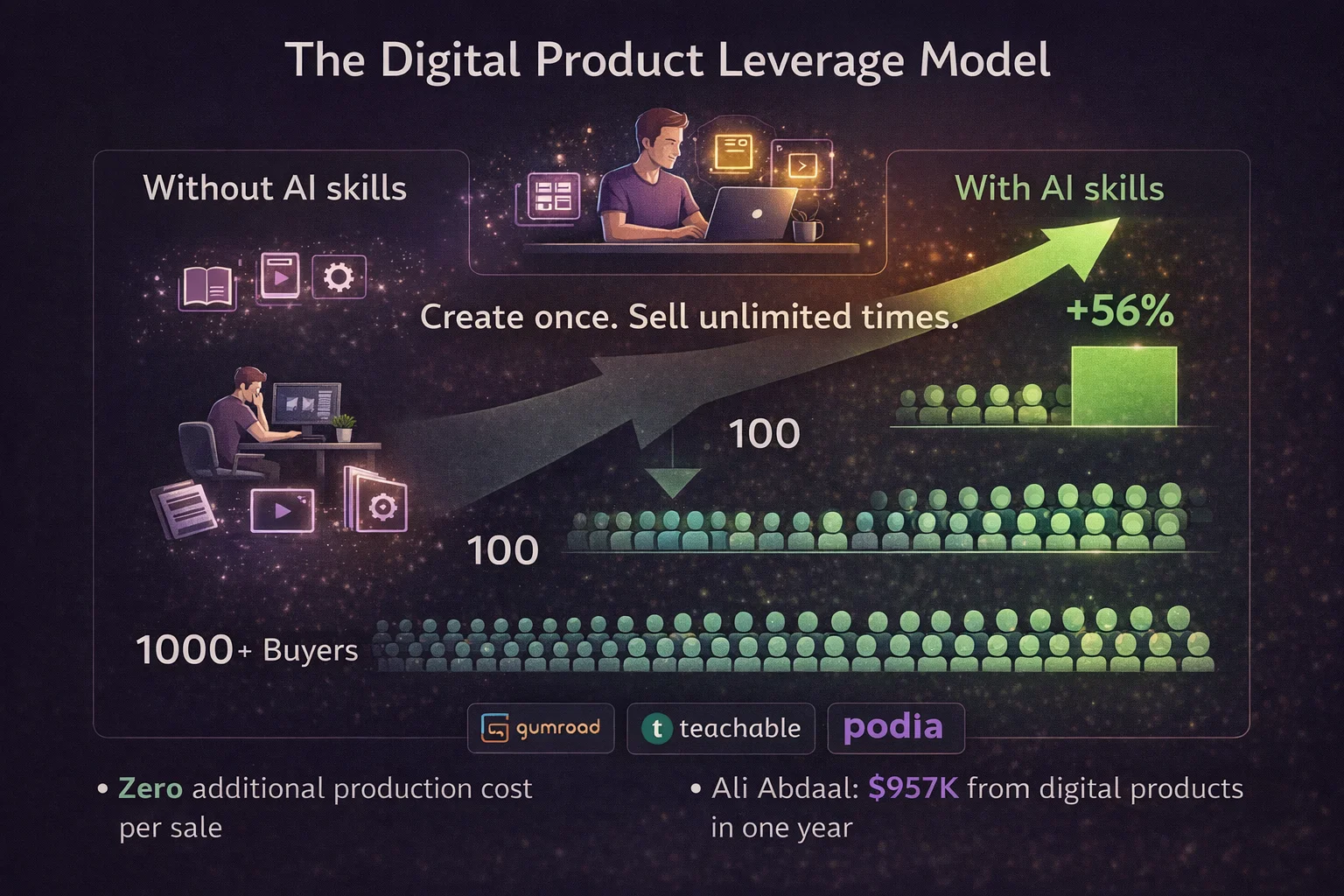
Digital products sit at the extreme leverage end of the income spectrum: they require significant upfront effort to produce, and then can be sold an unlimited number of times without additional production cost. Online courses, ebooks, templates, Notion systems, design assets, music samples, code snippets, Figma components, research reports and software tools all fall into this category.
The market for digital products has matured considerably. Platforms including Gumroad, Lemon Squeezy, Teachable, Kajabi and Podia provide the infrastructure for creation, payment and delivery. The US creator economy's digital products segment has been one of the fastest-growing categories, with creators like Ali Abdaal publicly documenting seven-figure annual revenues from online courses alone.
The challenge is that product-market fit is not guaranteed. Many digital products sell poorly not because they are bad but because they address a problem the creator finds interesting rather than a problem the market urgently needs solved. The highest-converting products address a specific, painful, practical problem for a clearly defined audience, and are priced to reflect the value of solving that problem rather than the time it took to create them. A template that saves a finance professional two hours of work every week is worth $50 to $200 to that person, regardless of whether it took you one hour or ten to build.
5. Affiliate Marketing Done Properly
Affiliate marketing has a poor reputation because most people do it poorly: plastering generic affiliate links across content without genuine editorial judgment. Done properly, it is one of the more scalable income mechanisms available, precisely because it requires no product creation and no customer service.
The model works as follows: you recommend products or services to an audience; when members of that audience make purchases through your tracked link, you receive a commission, typically between 5 and 50 percent depending on the product category. Software tools, financial services and online education products tend to pay the highest commissions.
The prerequisite for doing this well is an audience that trusts your recommendations, which in turn requires that you only recommend things you genuinely use and believe in. The moment affiliate recommendations become transparently mercenary, the trust that makes them valuable evaporates. The best affiliate marketers treat their recommendations like editorial decisions: they say no to most opportunities and only promote products they would recommend even if they were not being paid to do so.
Content combined with affiliate marketing is the standard model: you produce genuinely useful content in a niche, build an audience over time, and incorporate affiliate recommendations where they serve your readers. A personal finance blog that genuinely helps readers manage their money can earn significant affiliate income from the financial products it naturally discusses, without the recommendations feeling forced.
6. Productised Service Businesses
A productised service is a defined, packaged service offered at a fixed price with a defined scope and deliverable. Rather than custom-quoting every project, you offer the same service to every client at the same price: a website audit for $500, a brand identity package for $2,000, a competitive analysis report for $750, a month of social media management for $800.
This model solves a fundamental problem with conventional freelancing: the unpredictability and sales overhead of bespoke project work. When every project requires a custom proposal, negotiation and scope definition, a large portion of your working time goes toward activities that do not directly generate revenue. Productised services streamline this by eliminating the variation; every client buys the same thing, which means your delivery process can be systematised and your capacity can be planned.
The best productised services are built around tasks that businesses need regularly, can be delivered efficiently with AI tools, and have a clear and verifiable outcome. The niche focus is critical here too: a productised SEO content service for SaaS companies is a far more compelling proposition than a generic content service, because the specialisation signals expertise and allows you to develop repeatable processes that actually work for that specific context.
7. Online Consulting and Coaching
If you have deep expertise in a domain, there are people who will pay to access that expertise directly through one-to-one or small-group consulting and coaching sessions. Career coaching, executive coaching, business strategy consulting, marketing consulting, technology advisory work, financial coaching, health and performance coaching; demand in each of these categories has grown substantially as the platforms for connecting clients with independent practitioners have improved.
The pricing dynamics are favourable at the high end. An experienced professional in a high-value domain can credibly charge $150 to $500 per hour for one-to-one consulting; experienced executive coaches and senior management consultants charge significantly more. The platforms that facilitate this, including Clarity.fm, Intro.co and various coaching marketplaces, handle the booking and payment infrastructure.
The key to building a sustainable consulting practice is positioning: what specific problem do you solve, for whom, and what evidence do you have that you solve it well? A generalist who offers to help with anything commands low rates and struggles to attract clients. A specialist who has a demonstrable track record in a specific high-value problem attracts clients through reputation and referral, at rates that reflect the value of the outcome rather than the time spent.
8. Building a Paid Community or Membership
Circle's 2026 Community Trends Report documents a significant shift in creator monetisation toward owned, recurring revenue from memberships and communities rather than platform-dependent advertising. In 2026, membership-based income has become the primary revenue foundation for many community-led creator businesses, with most communities charging between $26 and $50 per month.
The appeal of this model is predictability. Membership revenue is recurring, which means it is plannable in a way that project-based income or advertising revenue is not. A community of 500 members paying $35 per month generates $17,500 in monthly revenue, without requiring the creation of new content for every sale.
The value proposition for members is typically a combination of access to the creator's knowledge, connection with peers in the same niche, and accountability or structure that helps them achieve something specific. Communities built around a clear transformation, I will help you do X, where X is something your audience urgently wants to achieve, perform substantially better than communities built around a vague sense of belonging.
9. E-Commerce With a Distinctive Angle
E-commerce remains a viable income model, but the landscape is unambiguous: undifferentiated dropshipping of generic products is no longer a viable strategy. The market is saturated, margins are thin and competition from platforms with structural advantages, including Amazon and Alibaba-affiliated stores, is overwhelming for generic product sellers.
What does work is differentiation: private-label products in a specific niche where you can build a brand, handmade or artisan products sold on platforms like Etsy where authenticity commands a premium, or physical-digital hybrids where a physical product is bundled with digital content or community access. The Shopify ecosystem has matured to make direct-to-consumer brand building more accessible than ever, and US consumers in particular have demonstrated strong willingness to pay premium prices for products from brands whose values they trust.
The most scalable e-commerce model for individuals in 2026 combines a genuine product niche with a content engine that builds organic discovery over time. A brand that makes exceptional coffee equipment and runs a YouTube channel about home brewing does not need to pay for advertising; it earns its customer acquisition through the content.
10. AI Services and Automation Consulting
The tenth method may be the highest-growth opportunity in 2026 specifically. Businesses across every sector are actively trying to implement AI tools in their operations and are finding that the gap between knowing AI tools exist and knowing how to deploy them effectively in a specific business context is large and practically significant. Individuals who can bridge that gap are in high demand.
AI services that are genuinely in demand include: prompt engineering and AI workflow design for businesses; building and deploying custom GPT assistants or AI agents for specific business processes; automating repetitive workflows using tools like Zapier, Make, or n8n combined with AI APIs; auditing existing processes for AI automation opportunities; and training teams to use AI tools effectively in their specific context.
The AI wage premium is already clear in the data: a 56 percent premium over comparable roles without AI skills, according to PwC. AI prompt engineers command average hourly rates of $54 on freelance platforms, with experienced practitioners charging substantially more. This category will continue to grow as adoption increases; most businesses are still in the early stages of implementation, and the companies that figure out genuine AI integration in 2026 and 2027 will have a substantial competitive advantage over those that do not.
How to Choose Where to Start
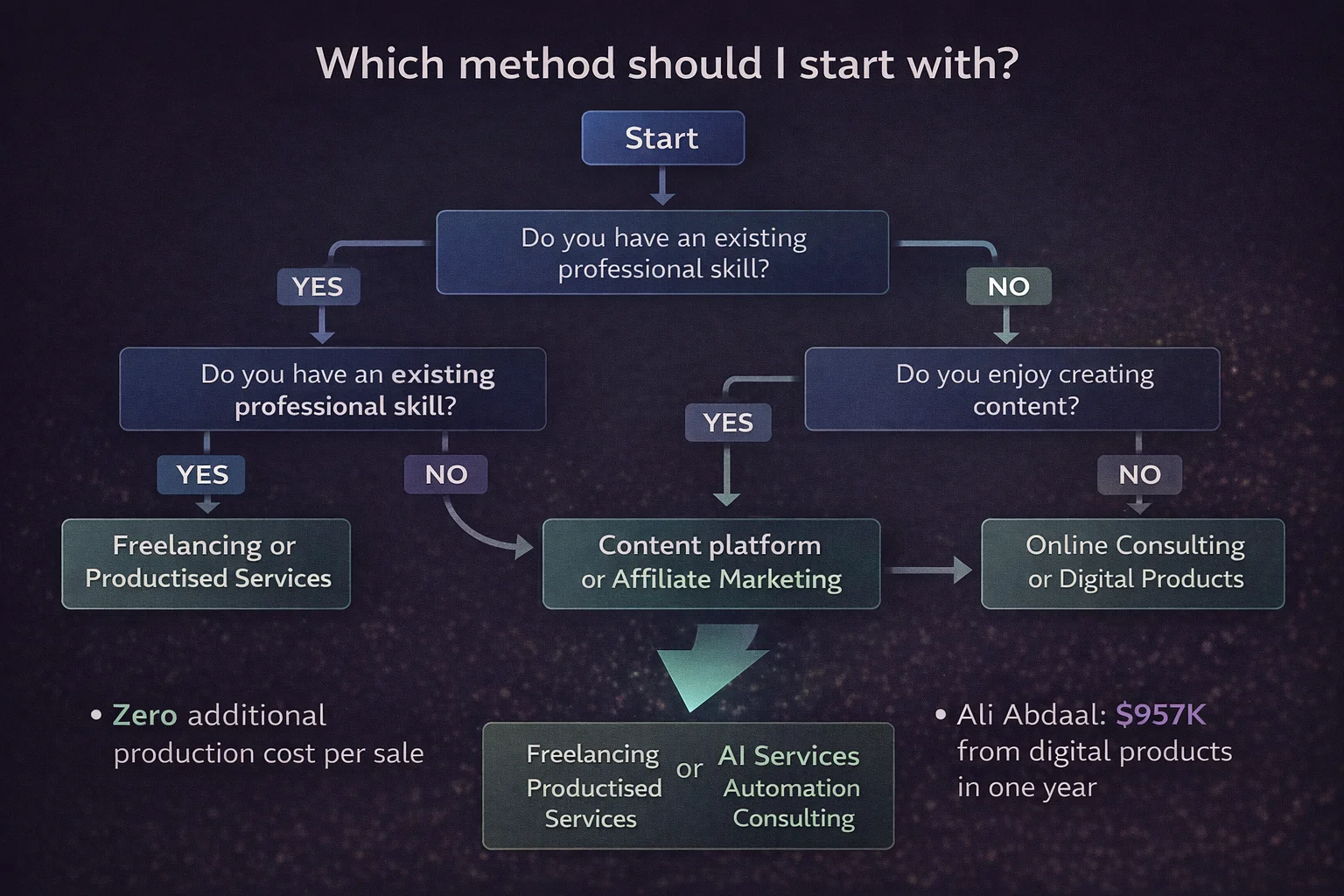
The most common mistake people make when encountering a list like this is attempting to pursue several methods simultaneously before any of them has reached viability. Building anything in the digital economy requires consistency over time, and consistency requires focus. The question to ask is not which of these ten is best in the abstract, but which one aligns most closely with skills you already have, problems you are already credible to solve, and an audience you already have or can realistically build.
A second useful filter is time horizon. Freelancing on Upwork can generate income within weeks. Building a YouTube channel to the point where it generates meaningful advertising revenue typically takes twelve to twenty-four months of consistent publishing. AI services can generate income quickly for those who move early. Digital products require the upfront investment of creation before any revenue appears.
The common thread across all ten methods is that they reward genuine quality over time. None of them are shortcuts; all of them compound. The question is simply which one you are willing to commit to long enough for the compounding to begin.
For the context behind these methods: The Income System Has Changed. Most People Don't Know It Yet.