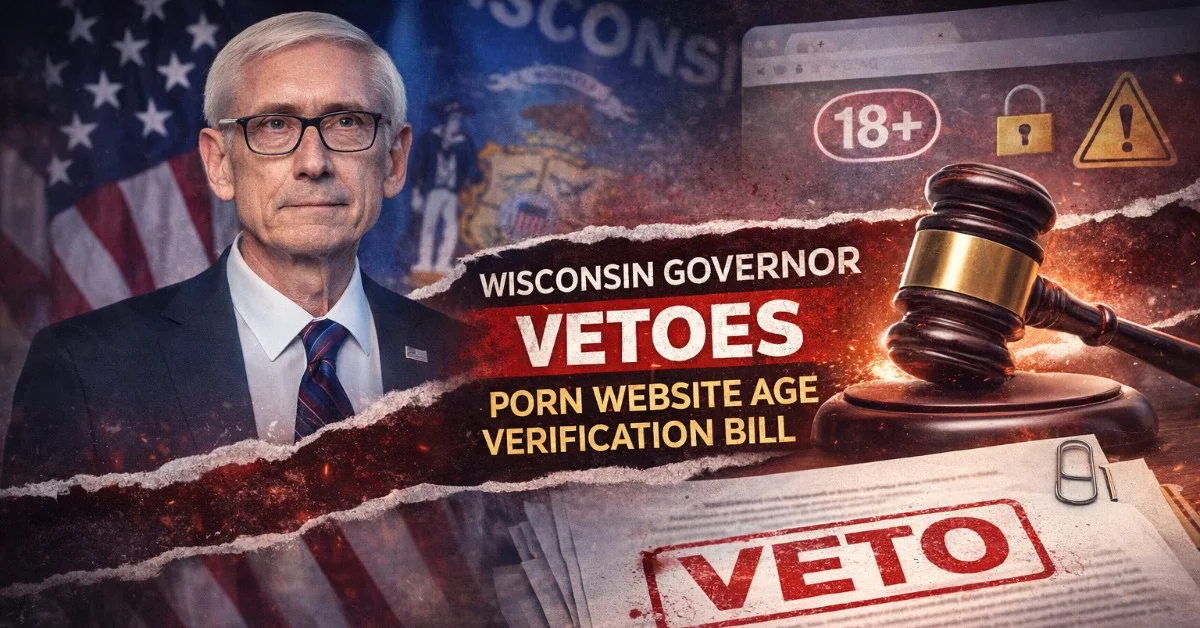
Wisconsin Gov. Tony Evers vetoed Assembly Bill 105 on April 3, 2026, blocking a proposal that would have required certain adult-content websites to verify the age of users before granting access. The bill targeted websites with a substantial share of material considered harmful to minors. Evers said the measure placed an intrusive burden on adults trying to access constitutionally protected material and raised privacy and data-security concerns.
What AB 105 would have required
The enrolled bill would have created a new section of Wisconsin law covering the distribution of certain material on the internet. Under the proposal, covered businesses would have needed to use a “reasonable age verification method” before allowing access. The bill text describes methods that could include government-issued identification or commercially reasonable systems using public or private transactional data.
Supporters argued the measure was designed to keep minors away from explicit online content. Similar age-verification laws have passed in multiple states, creating a national patchwork that adult-content websites, civil liberties groups and courts are still sorting through. Wisconsin’s version also drew attention earlier because a VPN-related provision was removed before the bill reached the governor.
Why Evers vetoed it
404 Media reported that Evers objected to the bill’s intrusion into residents’ personal privacy. The Verge also quoted his concern that the legislation burdened adults seeking constitutionally protected materials and could expose personally identifiable information to misuse. That privacy objection is central to the broader debate: age verification may serve a child-safety goal, but it can require adults to hand sensitive identity data to private verification systems.
The ACLU of Wisconsin opposed AB 105 and SB 130 on First Amendment and privacy grounds, warning that the bill could chill access to legal content and expose users to surveillance or data risks. Those arguments have appeared in challenges to similar laws elsewhere, especially where verification depends on IDs, biometric checks or data brokers.
The national legal context
Wisconsin’s veto does not end the national fight over age verification. States continue to experiment with laws aimed at adult websites and social platforms, while courts evaluate whether the rules are narrowly tailored and whether they overburden adults’ speech rights. The policy tension is real: lawmakers want stronger child-safety tools, while privacy advocates argue that identity checks can create new risks for everyone.
Evers did not frame the veto as indifference to child safety. The more precise reading is that he rejected this particular method. Reporting on the veto noted that device-based or less identity-invasive systems could remain part of future discussions. That leaves room for another bill, but any replacement would need to address the central problem he raised: how to protect minors without building a database of adults’ sensitive browsing behavior.
For now, Wisconsin joins the states where age-verification mandates for adult sites have not become law. The decision matters beyond the state because it highlights the unresolved trade-off at the heart of online safety policy: the same tool that checks a teenager’s age may also force adults to identify themselves before reading or viewing legal content.