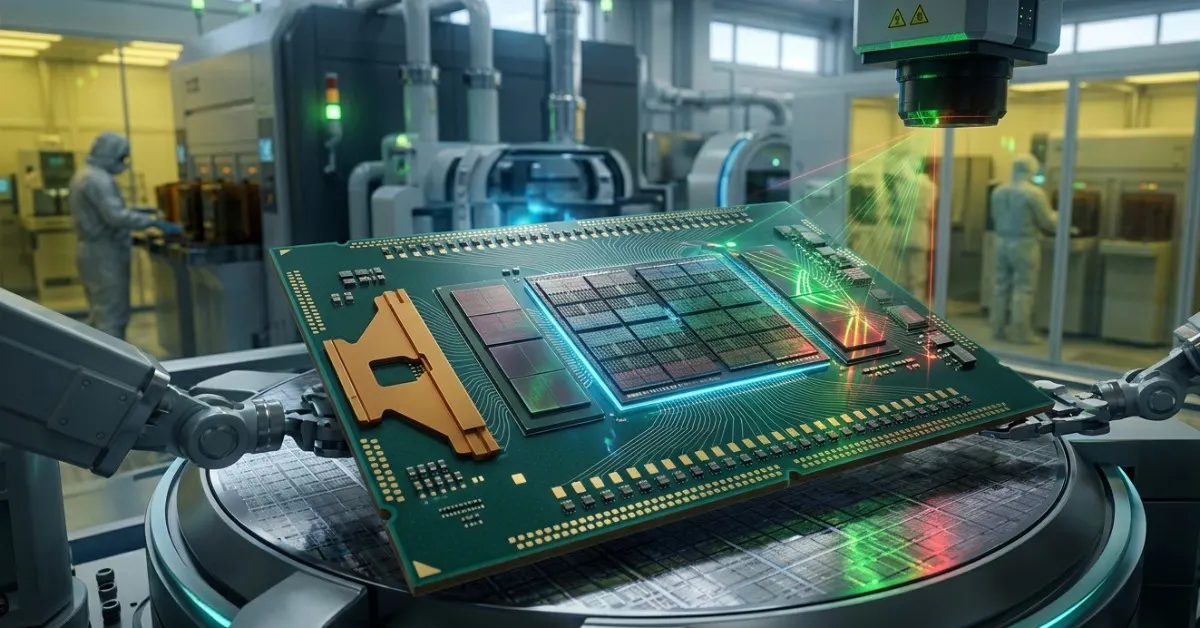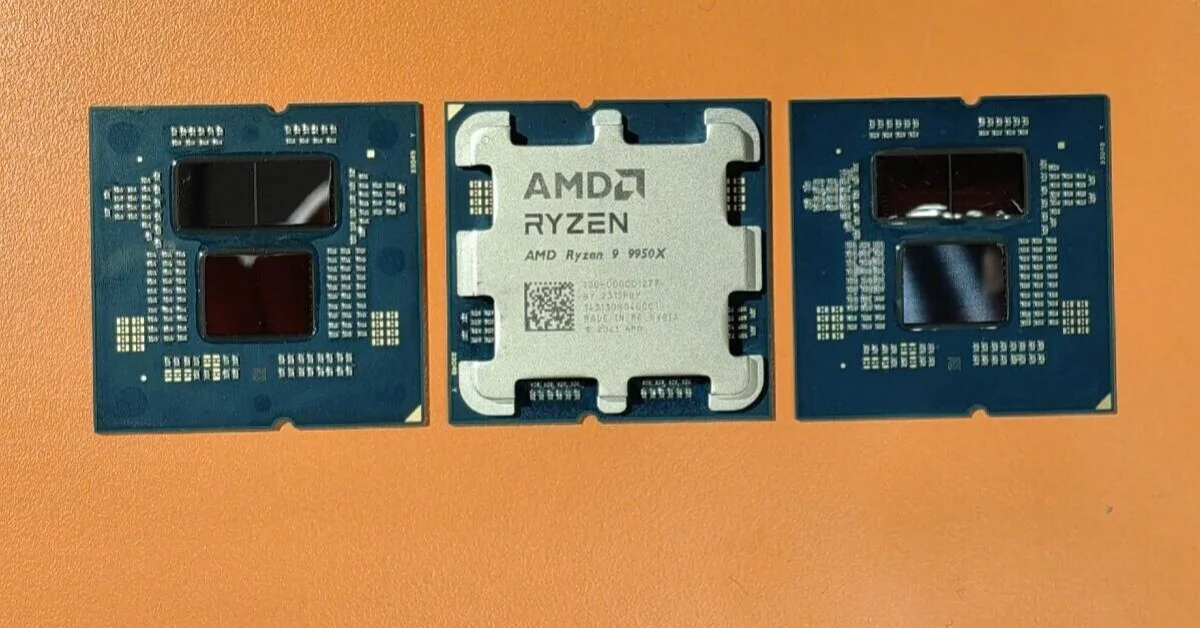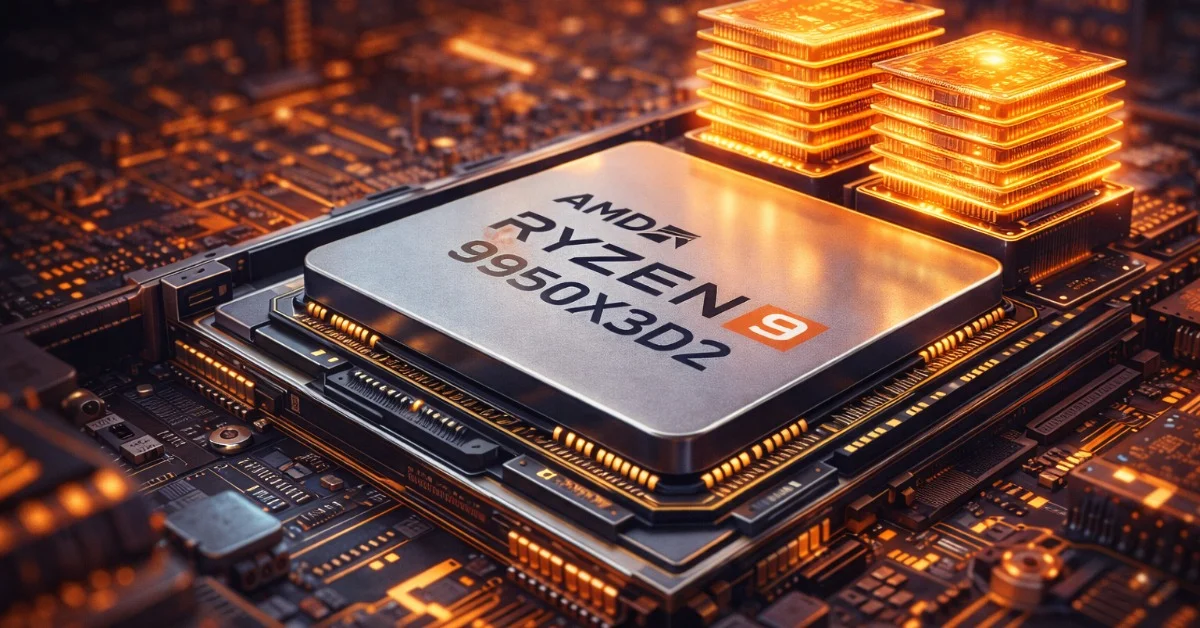
AMD on April 22 released the Ryzen 9 9950X3D2 Dual Edition, a desktop processor that puts AMD 3D V-Cache on both chiplets and gives the company a new high-end part aimed at developers, creators and gamers. The chip is based on the Zen 5 architecture, has 16 cores and 32 threads, and carries 208MB of total cache. AMD said the processor is available now through leading retailers and in prebuilt systems, including the Alienware Area-51 Desktop, with a suggested etailer price of $899.
Dual stacked cache moves beyond a single chiplet
The key change is not the core count, but the cache layout. AMD described the Ryzen 9 9950X3D2 as its first desktop processor to bring dual AMD 3D V-Cache technology to the desktop, using second-generation 3D V-Cache across all 16 cores. That detail matters because previous X3D desktop designs made cache a defining feature for selected parts of the processor, while this model extends the approach across both chiplets.
According to AMD, the processor reaches up to 5.6GHz boost frequency and has a 4.3GHz base frequency. Its listed thermal design power is 200W. The company also said the part is intended as a drop-in upgrade on AM5, though the announcement did not spell out motherboard firmware requirements or list every compatible board.
AMD frames the chip around creator and developer workloads
AMD’s launch language places the Ryzen 9 9950X3D2 squarely beyond a conventional gaming pitch. The company said the larger cache pool is designed to keep more data closer to the cores, reducing memory bottlenecks in workloads such as complex compile jobs, large-scale simulations and memory-intensive creation tasks. AMD cited average uplift of 5% to 8% in selected creator workloads, including DaVinci Resolve and Blender, and in large source-code builds including Unreal Engine and Chromium, compared with the previous-generation Ryzen 9 9950X3D.
Those figures come from AMD and partner lab testing, so they remain vendor-provided performance claims rather than independent benchmarks. Still, the positioning is clear: AMD is trying to make stacked cache relevant to workstations and high-end desktops where compile time, rendering throughput and iteration speed can matter as much as frame rates. That is the practical distinction in this launch.
Alienware is the first named system maker in AMD’s announcement. Matt McGowan, head of product at Alienware, said the Area-51 was built to make use of AMD’s dual 3D V-Cache architecture and described it as the most powerful Alienware desktop the company has built with AMD. AMD did not disclose a full list of OEM systems, regional retail availability or non-U.S. pricing in the announcement.
The next step is independent testing and system availability. AMD has put the Ryzen 9 9950X3D2 on sale at the top of its desktop stack, but the unanswered questions are the ones buyers usually cannot resolve from a launch page alone: sustained thermals, platform behavior under mixed workloads, and how much the dual-cache design changes real projects outside AMD’s selected tests.