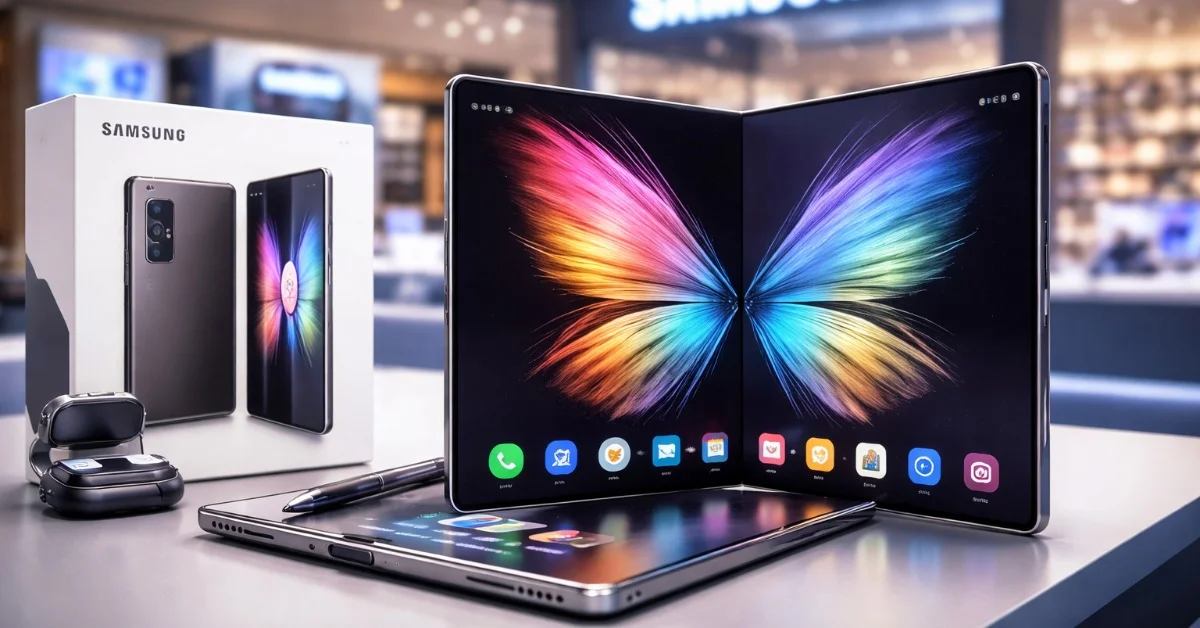
Samsung’s Galaxy Z TriFold is no longer a simple upcoming-restock story. After a reported US restock on April 10, Samsung’s own product page now describes the limited-run foldable as completely sold out. The update matters because the original restock coverage created a narrow buying window for a device that was already unusual: a $2,899 dual-hinge phone-tablet hybrid sold in limited quantities through Samsung.com and Samsung Experience Stores.
What happened with the April restock
9to5Google reported on April 8 that Samsung would bring the Galaxy Z TriFold back to the US on April 10, both online and in physical Samsung Experience Store locations. A follow-up on April 10 said the device was scheduled to go live through Samsung’s online store that morning, with the outlet framing it as possibly the last real opportunity to buy the model directly. Samsung’s current product page now reinforces that limited-availability picture by listing the phone as sold out rather than as a standard product still in the regular lineup.
The device had launched in the United States on January 30, 2026, according to Samsung’s US newsroom. Samsung priced it at $2,899, offered it in Crafted Black with 512GB of storage and positioned it as a showcase for its most ambitious foldable hardware. That made the TriFold closer to a halo product than a mainstream upgrade path for most Galaxy buyers.
Why the Galaxy Z TriFold was different
The TriFold’s appeal came from its form factor. Unlike Samsung’s book-style Galaxy Z Fold line, the Galaxy Z TriFold uses two hinges and opens into a larger 10-inch main screen while still folding inward for protection. Samsung says the device also includes a 6.5-inch cover display, a 200 MP wide camera, Snapdragon 8 Elite for Galaxy and a three-cell battery system designed to distribute power across the panels.
Those specifications helped Samsung present the TriFold as a look at where foldables could go next, but they also explain why supply was limited. Dual-hinge construction, display durability, thinness and high-end internals make the device more complex than a normal flagship phone. At $2,899, it was also aimed at enthusiasts, collectors, developers and early adopters rather than the broad premium-phone market.
What buyers should take from it
For shoppers, the practical message is simple: the April restock appears to have been a short window, not a normal relaunch. Anyone still looking for the phone should be cautious with resale listings, where limited supply can push prices higher and make warranty status less clear. Samsung’s own page directs visitors toward newer mainstream foldables instead of offering another TriFold purchase option.
For the foldable market, the TriFold still served a purpose even if it was brief. It let Samsung test a more ambitious layout in public, generate attention around dual-hinge hardware and gather feedback before any broader successor. The sold-out status does not mean the idea is dead; it means this first Galaxy TriFold run should be treated as an experimental, limited release rather than a mass-market product cycle.