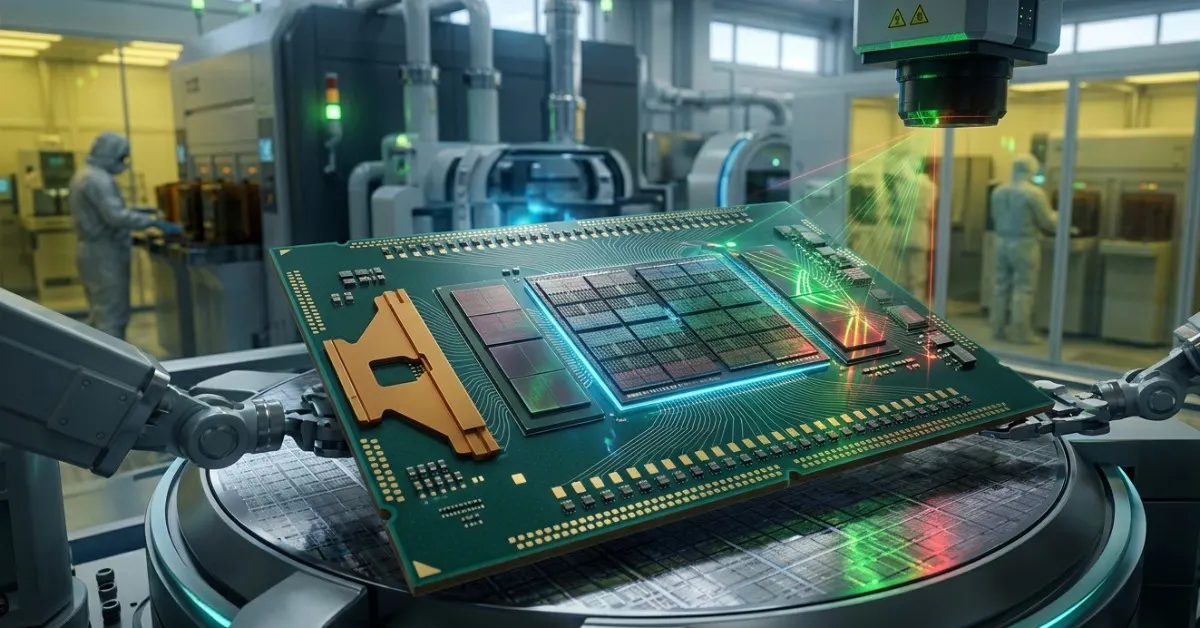
AMD has begun the production ramp for its sixth-generation EPYC processor, codenamed Venice, on TSMC’s 2nm process technology. The company describes the move as the first high-performance computing product to enter production ramp on TSMC’s advanced 2nm node, a milestone that matters because server CPUs are becoming more central to AI infrastructure, not less.
The announcement does not mean every Venice-based system is already shipping at scale. It means AMD and TSMC have moved the processor into the manufacturing ramp phase in Taiwan, with AMD also saying it plans to ramp production at TSMC’s Arizona facility later. For cloud operators, enterprise buyers and HPC customers, the message is about roadmap confidence: AMD wants to show that Zen 6 server silicon is moving from slideware into manufacturing.
Why a CPU launch matters in the AI cycle
The AI boom is often described through GPUs and accelerators, but the CPU layer still coordinates data movement, networking, storage, security and system orchestration across the data center. AMD is using Venice to make that point. In its official release, the company says agentic AI workloads are increasing demand for infrastructure that can move faster from development to production.
That framing is important. Large AI clusters need accelerators, but they also need processors that can feed them, manage memory movement and support general-purpose work around the model. Venice is therefore not a replacement for Instinct GPUs or other accelerators. It is part of the platform layer that makes dense AI and HPC deployments usable.
What is confirmed, and what is reported
AMD’s confirmed points are the 2nm production ramp, the Venice codename, its place in the sixth-generation EPYC roadmap and the plan to extend 2nm use with a follow-on processor called Verano. The company also links Verano to performance-per-dollar-per-watt goals and advanced memory innovations, including LPDDR, for power-constrained AI and cloud workloads.
Tom’s Hardware adds the more detailed platform context, reporting that Venice reaches up to 256 Zen 6 cores and is tied to a new SP7 platform, broader memory bandwidth and stronger CPU-to-GPU connectivity. Those figures are useful for understanding the expected product class, but they should be kept distinct from AMD’s own shorter press statement.
Taiwan, packaging and supply
The Venice announcement also sits next to AMD’s separate pledge of more than $10 billion in Taiwan ecosystem investment. That money is aimed at advanced packaging and supply-chain capacity, both of which now matter as much as raw process-node leadership. Modern AI systems depend on packaging, interconnect and memory as much as they depend on the CPU die itself.
For AMD, Venice is a signal that its server roadmap is staying aggressive against Intel and NVIDIA-era infrastructure demands. For customers, the bigger test will come later: availability, platform cost, software maturity and real performance in cloud and enterprise deployments. The 2nm milestone is significant, but its business impact will be measured only when systems based on Venice and its follow-on platform reach buyers at scale.