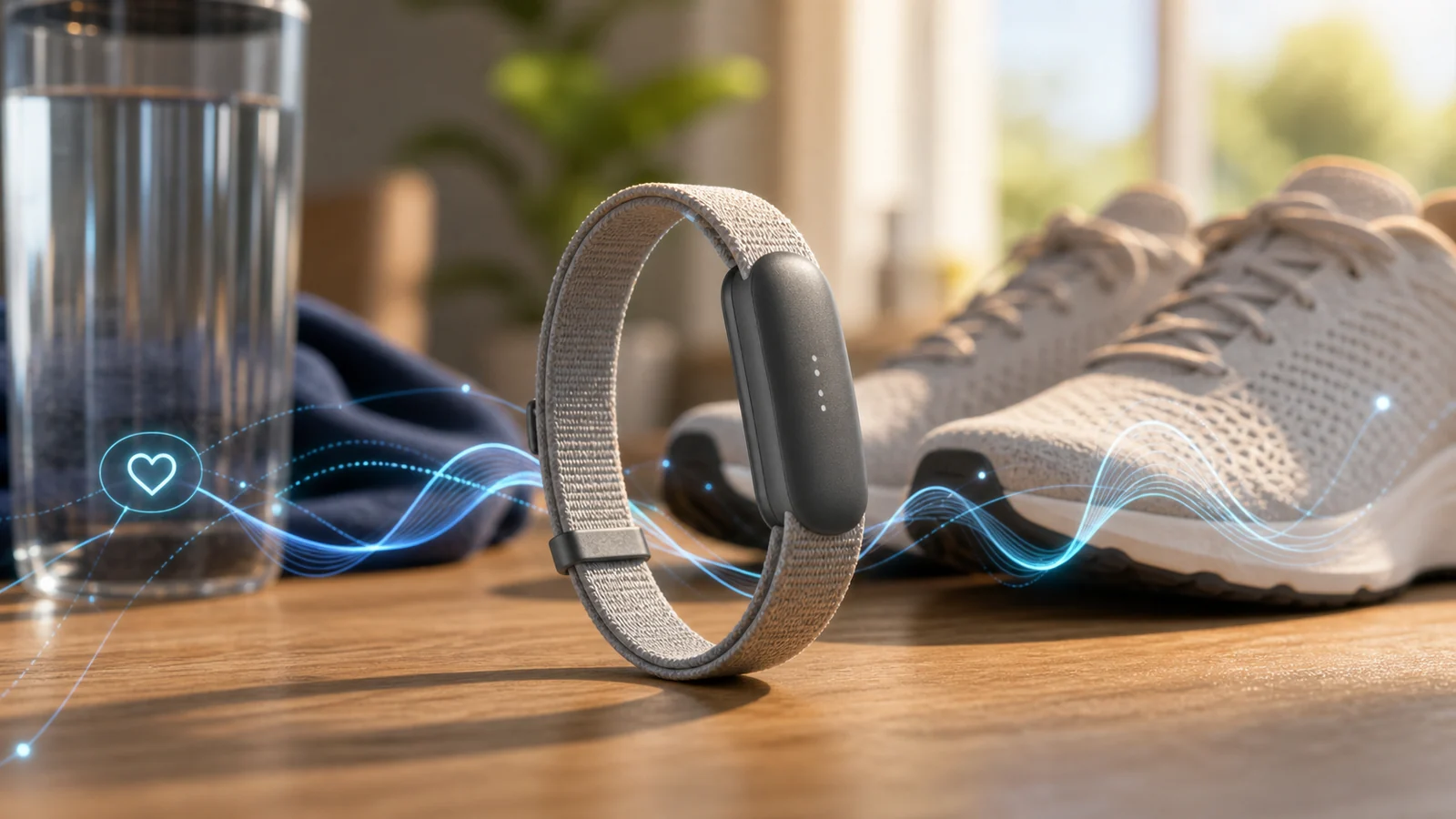
Google has introduced the Fitbit Air, a small screenless tracker aimed at users who want continuous health data without wearing another smartwatch. The device is available for pre-order at $99.99 and is scheduled to reach U.S. shelves on May 26. A Stephen Curry Special Edition costs $129.99 and adds a performance-focused band co-designed with the NBA player.
The key issue is the subscription model. Fitbit Air comes with a three-month Google Health Premium trial, and that paid layer unlocks more personalized coaching with Google Health Coach. Core tracking, however, is not presented as locked behind a mandatory subscription: the device still tracks heart rate, sleep, steps, SpO2, resting heart rate, heart rate variability and heart rhythm alerts through the Google Health app.
What Fitbit Air actually tracks
Google describes Fitbit Air as its smallest tracker yet. It has no screen, so the pitch is not notifications or apps on the wrist. The idea is quieter: wear it all day and overnight, then check data on the phone when it is useful. Google says the tracker supports 24/7 heart-rate monitoring, sleep stages and duration, automatic workout detection, SpO2 and Afib alerts. Battery life is listed at up to seven days, with five minutes of charging providing about a day of use under Google’s stated test conditions.
That makes Fitbit Air closer to a passive health band than a smartwatch replacement. It could make sense for people who already use a Pixel Watch or another smartwatch during the day but want a lighter device for sleep. It may also appeal to users who dislike wearable screens but still want basic wellness metrics in one app.
Where Premium still matters
The subscription question should be handled carefully. Fitbit Air does not appear to require a paid plan for basic health and activity tracking, but Google clearly wants the device to work as an entry point into Google Health Premium. The included trial gives access to Google Health Coach, where Gemini-powered guidance can build fitness plans, interpret sleep patterns and adjust recommendations based on user input.
That is the broader strategy behind the product. Google is not simply releasing a cheaper Fitbit. It is trying to connect low-friction health hardware with its wider Gemini Intelligence rollout across consumer products. The hardware price gets the device onto more wrists; the optional coaching layer is where Google hopes to build a longer-term health service.
Who should consider it?
Fitbit Air looks most relevant for users who want simple, passive tracking and do not need a display, LTE, apps or smartwatch-style alerts. It is less compelling for people who want on-device workout controls, music, maps or rich notifications. The device also requires a compatible phone and Google Health app setup, so it is not a standalone health computer.
The best way to read Fitbit Air is as a low-cost entry point into Google’s renewed health ecosystem. The $99.99 price is aggressive, the screenless design is intentionally minimal and the subscription model is optional rather than forced for the basics. Whether it becomes a real Whoop or Oura alternative will depend less on the hardware and more on how useful Google Health Coach feels after the trial ends.